

Angiosteosis-PSI NPs
Poly(succinimide) nanoparticles as reservoirs for spontaneous and sustained synthesis of poly(aspartic acid) under physiological conditions: potential for vascular calcification therapy and oral drug delivery
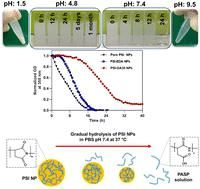
The preparation of poly (succinimide) nanoparticles (PSI NPs) is introduced and their properties and characteristics are studied. Stable PSI NP with tunable size and narrow dispersion were prepared by direct and reverse precipitation without any stabilizer or emulsifier. The results showed that PSI NPs was gradually converted to poly (aspartate) (PASP) under physiological conditions (37 C, pH 7.4), while remaining stable under weakly acidic conditions. Adjusting and delayed dissolution curves by chemical modification of PSI. This spontaneous transformation could also demonstrate great potential for oral therapeutic delivery to the colon by transplanting fluorophores onto the PSI backbone. Continued PASP synthesis also contributes to the sustained reduction of reactive oxygen species induced by iron. Furthermore, PSI NPs effectively prevented the calcification of smooth muscle cells in vitro. This is attributed to the chelation of calcium ions with PASP, thereby inhibiting calcium deposition, as PSI NPs acts as a reservoir for sustained PASP synthesis under cell culture conditions. Overall, this study clarifies the preparation and characterization of biocompatible and biodegradable PSI-based NPs and paves the way for further studies to discover the unrealized potential of this polymer in the form of nanoparticles.
18915694570
Previous: BK Engineering Bacteri
Next: Revascularization-β-HS