

Cardiac tissue engineering- -the mNCC-MeGel hydrogel
Incorporating nanocrystalline cellulose into a multifunctional hydrogel for heart valve tissue engineering applications
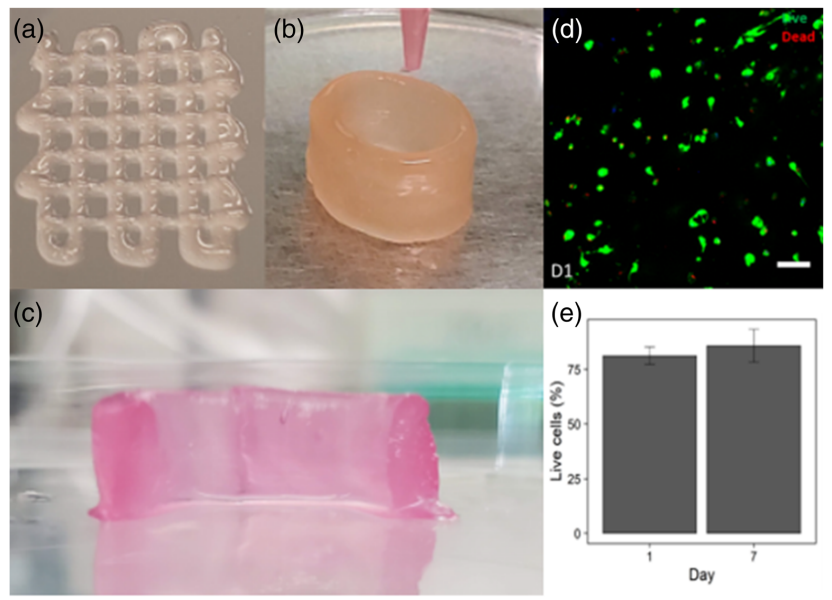
Functional tissue engineering heart valve (TEHV) has been an unattainable goal for nearly 30 years. Continuing challenges include the requirement for engineered leaflets with non-linear elastic tissue biomechanical properties, support the phenotype of quiescent fibroblasts, and resistance to osteogenic differentiation. Nanocellulose is an attractive tunable biomaterial that has not yet been used for this application. A series of photocrosslinked composite hydrogels mNCC-MeGel (mNG) were prepared by attaching TEMPO modified nanocrylated cellulose (mNCC) to the skeleton of methacrylate gelatin (MeGel). Their structures are characterized by FTIR, 1 H NMR and uniaxial compression tests. Human adipose-derived mesenchymal stem cells (HADMSC) were encapsulated in the material and assessed for valve stromal cell phenotype after 14 days of culture in normal and osteogenic media. Compared with MeGel controls, HADMSC encapsulated in mNG showed decreased α smooth muscle actin (α SMA) expression and increased vimentin and aggrecan expression, indicating that this material supports a quiescent fibroblast phenotype. Under osteogenic medium conditions, HADMSC in the mNG hydrogel showed lower expression of osteogenic genes, including Runx 2 and osteocalcin, indicating resistance to calcification. As a proof of principle, mNG hydrogel combined with vistener was used for 3D bioprinting a self-supporting tubular structure to maintain cell viability.
18915694570
Previous: Medical sensors and de
Next: BK Engineering Bacteri