

ACS Appl. Mater. Interfaces: Resistive memory and synaptic learning applications based on Ti3C2MXene oxide nanosheets


1. Article overview
MXene is a new two-dimensional (2D) nanomaterial, which has aroused great interest in industry and academia due to its excellent electrical, mechanical and chemical support. However, mxene-based device engineering is rarely reported. In this study, the author explored the application of Ti3C2MXene in digital and analog calculations by engineering the top electrode. To this end, a simple chemical process was used to synthesize Ti3C2MXene, and various analysis tools were used to study its structure, composition and morphological characteristics. Finally, the author discussed its potential applications in bipolar resistance switches (RS) and synaptic learning devices. The influence of the top electrode (Ag, Pt and Al) on the RS characteristics of Ti3C2mxene-based memory devices is deeply studied. Compared with electrolytic-based devices on top of Ag and Pt, Al/Ti3C2/Pt devices exhibit better RS and are more reliable in operation. Therefore, the author chose Al/Ti3C2/Pt memory devices to simulate the enhancement and inhibition of synaptic characteristics, as well as the Hebbian learning rules based on peak time-dependent plasticity.
Two, graphic guide
MXene is a new two-dimensional (2D) nanomaterial, which has aroused great interest in industry and academia due to its excellent electrical, mechanical and chemical support. However, mxene-based device engineering is rarely reported. In this study, the author explored the application of Ti3C2MXene in digital and analog calculations by engineering the top electrode. To this end, a simple chemical process was used to synthesize Ti3C2MXene, and various analysis tools were used to study its structure, composition and morphological characteristics. Finally, the author discussed its potential applications in bipolar resistance switches (RS) and synaptic learning devices. The influence of the top electrode (Ag, Pt and Al) on the RS characteristics of Ti3C2mxene-based memory devices is deeply studied. Compared with electrolytic-based devices on top of Ag and Pt, Al/Ti3C2/Pt devices exhibit better RS and are more reliable in operation. Therefore, the author chose Al/Ti3C2/Pt memory devices to simulate the enhancement and inhibition of synaptic characteristics, as well as the Hebbian learning rules based on peak time-dependent plasticity.
Two, graphic guide
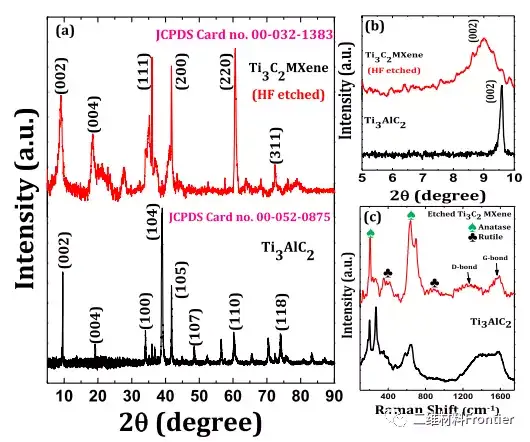
Figure 1. (a) XRD and Raman spectra of Ti3AlC2 and Ti3C2MXene.
In the above figure, (a) is the spectrum of Ti3AlC2 (before HF etching) and Ti3C2MXene (after HF etching); (b) is the XRD spectrum in the 2θ range of 5-10°; (c) is the pull of Ti3AlC2 and Ti3C2MXene Mann spectroscopy.
In the above figure, (a) is the spectrum of Ti3AlC2 (before HF etching) and Ti3C2MXene (after HF etching); (b) is the XRD spectrum in the 2θ range of 5-10°; (c) is the pull of Ti3AlC2 and Ti3C2MXene Mann spectroscopy.
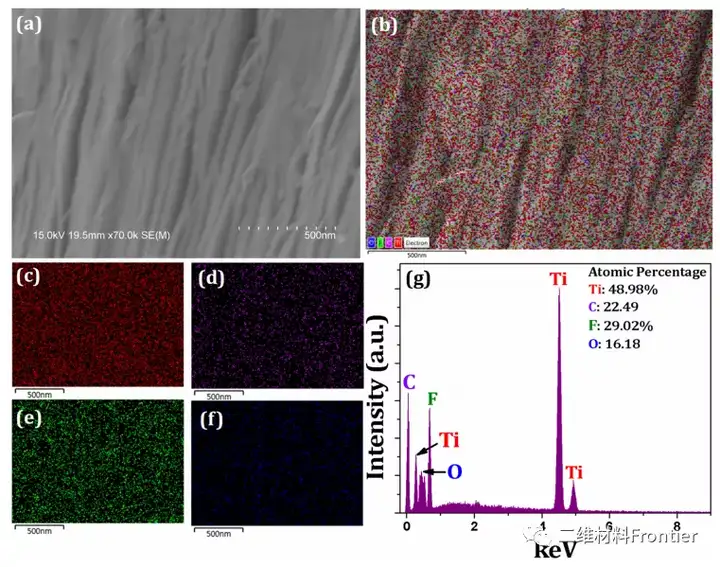
Figure 2. SEM, EDS element map and EDS map of Ti3C2 nanosheets.
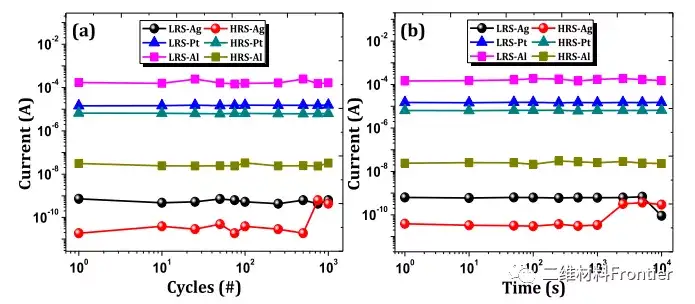
Figure 3. Electrode dependence and memory retention of Ti3C2MXene devices.
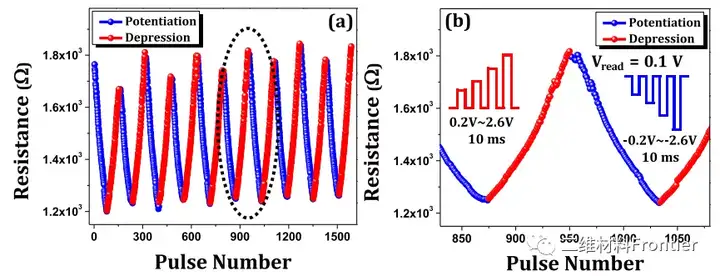
Figure 4. Synaptic properties and STDP-based enhancement and inhibition.
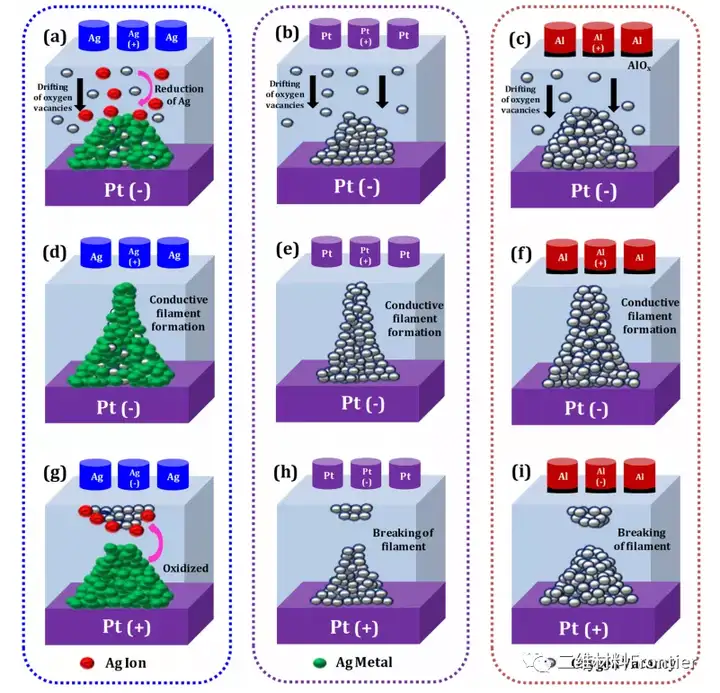
Figure 5. Possible filamentary RS mechanisms for Ag/Ti3C2/Pt, Pt/Ti3C2/Pt and Al/Ti3C2/Pt devices。
Third, the full text summary
In summary, we studied the effects of different TEs on the RS characteristics of Ti3C2MXene memory cells, and used optimized equipment to simulate synaptic characteristics. Electrical characterization results show that the RS performance of Al/Ti3C2/Pt memory devices is better than that of Ag/Ti3C2/Pt and Pt/Ti3C2/Pt memory devices. Interestingly, all mxene-based devices exhibit dual-value q−φ behavior, indicating a major memory effect. Compared with the other two devices, the Al/Ti3C2/Pt memory device exhibits a good memory window, moderate changes during RS and good memory retention.
In summary, we studied the effects of different TEs on the RS characteristics of Ti3C2MXene memory cells, and used optimized equipment to simulate synaptic characteristics. Electrical characterization results show that the RS performance of Al/Ti3C2/Pt memory devices is better than that of Ag/Ti3C2/Pt and Pt/Ti3C2/Pt memory devices. Interestingly, all mxene-based devices exhibit dual-value q−φ behavior, indicating a major memory effect. Compared with the other two devices, the Al/Ti3C2/Pt memory device exhibits a good memory window, moderate changes during RS and good memory retention.
Article link:
https://dx.doi.org/10.1021/acsami.0c19028
https://dx.doi.org/10.1021/acsami.0c19028



18915694570
Previous: NML Review | Universit